Dollhouse Miniature Veggie Garden Rhubar 3D SVG Review
A Designer's First Look at This Paper Flowers Asset
As a brand designer who has spent years helping local businesses translate their vision into tangible visual identities, I am always on the lookout for assets that bridge the gap between digital convenience and tactile charm. Recently, I came across Dollhouse Miniature Veggie Garden Rhubar, a unique design asset categorized under Paper Flowers. My initial impression was one of whimsical nostalgia mixed with modern precision. Unlike generic clipart that often feels flat or overused, this 3D SVG file offers a depth that immediately suggests a handmade, organic aesthetic. It evokes a mood that is simultaneously playful and grounded, perfect for brands that want to communicate care, growth, and a connection to nature.
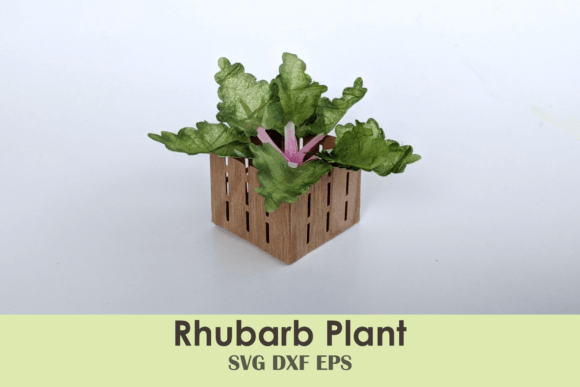
The specific dimensions mentioned in the specs—a rhubarb plant standing 1.5 inches high by 3 inches wide, paired with a fence planter of 1.25 inches square—indicate a level of detail that translates beautifully when scaled for print. For a boutique owner or a product seller looking to stand out on a crowded shelf, this asset does not just fill space; it tells a story. It feels less like a standard illustration and more like a miniature sculpture ready to be brought to life through paper crafting or digital rendering.
Integrating the Rhubarb Garden into Local Brand Identity
Imagine a scenario where I am working with a small-batch jam maker or an artisanal bakery launching a spring collection. The challenge is to create packaging that feels premium yet approachable. This is where Dollhouse Miniature Veggie Garden Rhubar becomes a strategic tool. In the realm of small business branding, every element must serve a purpose. Using this asset as a central motif for a product label can instantly elevate the perceived value of the goods inside. Instead of a generic fruit icon, the intricate details of the rhubarb plant suggest freshness and quality sourcing.
I envision using this graphic for a seasonal campaign for a local coffee shop. By incorporating the garden box and fence elements into menu graphics or window decals, the business creates a cohesive narrative around "homegrown" values. The versatility of the 3D SVG format allows me to manipulate the colors to match the brand palette perfectly. Whether the brand needs soft pastels for a feminine skincare line or bold, earthy tones for a rustic home decor shop, the vector nature ensures crisp edges and professional results at any size. This flexibility is crucial for local business owners who need to adapt their visuals across various touchpoints without hiring a new illustrator for every tweak.
Practical Applications for Packaging and Promotional Materials
The true test of any graphic design asset is its utility in real-world applications. Here is how I would deploy Dollhouse Miniature Veggie Garden Rhubar across different marketing channels:
- Product Labels and Hang Tags: The detailed fence planter makes an excellent frame for ingredient lists or thank-you messages on hang tags for handmade soaps or candles. It adds a decorative border that draws the eye inward.
- Social Media Graphics: In a feed dominated by stock photos, a custom 3D-style illustration stands out. I would use the rhubarb plant as a hero image for Instagram stories announcing a new "Spring Harvest" flavor, ensuring the visual hierarchy guides the viewer to the call-to-action.
- Printable Inserts and Thank-You Cards: For e-commerce sellers, including a printed card featuring this garden scene reinforces the brand personality. It transforms a simple transaction into an unboxing experience that customers are likely to share online.
- Seasonal Campaign Visuals: The garden theme is inherently seasonal. This asset works perfectly for flyers, posters, and promotional banners during spring and summer, aligning the brand with themes of renewal and vitality.
By integrating this asset into packaging design, we achieve better shelf appeal. A package that looks handcrafted and thoughtful builds immediate trust with the customer. It signals that the business pays attention to detail, a trait that consumers associate with higher quality products.
Strategic Considerations: Where to Use and When to Pause
While Dollhouse Miniature Veggie Garden Rhubar is a powerful tool, experienced designers know that context is everything. This asset shines in environments that embrace warmth, creativity, and a slightly whimsical tone. However, there are scenarios where caution is required. For instance, in formal corporate branding or luxury minimalist designs where negative space is king, the detailed nature of the garden box might feel too busy. Similarly, on very small labels or in areas dense with legal information and ingredients, the intricate lines could compromise readability.
It is also vital to consider contrast. Placing this illustration on a low-contrast background might cause the details of the fence and leaves to get lost. Before finalizing a design, I always recommend testing the asset in black and white to ensure the shapes hold up without color support. Additionally, while the Paper Flowers style is charming, it may compete with script fonts or overly ornate typography. Pairing it with clean sans-serif or sturdy serif fonts often yields the most balanced result, allowing the illustration to breathe while maintaining legibility.
Designer Notes: Technical Checks and Licensing
Before committing this asset to a client project or a physical product run, there are several technical checks I perform. First, I verify the commercial license to ensure it covers commercial design uses such as physical product sales and unlimited print runs. Never assume a personal license applies to business branding; always confirm the terms to avoid legal issues down the line.
Next, I inspect the file integrity. Since this is a 3D SVG, I open it in vector software to check for closed paths and editable layers. This ensures that if I need to adjust the height of the rhubarb or change the color of the fence planter, I can do so without losing resolution. I also preview the design on realistic product mockups to see how it interacts with light and texture. Does the 1.5-inch height scale correctly on a jar? Does the 1.25-inch planter fit within the designated area of a sticker?
Finally, I compare the asset against competitor packaging. If every other brand in the niche is using flat, single-color icons, this dimensional garden illustration will provide a distinct competitive advantage. Conversely, if the market is saturated with similar complex illustrations, I might need to simplify the application to maintain uniqueness.
In conclusion, Dollhouse Miniature Veggie Garden Rhubar is more than just a digital download; it is a versatile component for building a robust brand identity. For creative entrepreneurs, marketers, and product sellers, it offers a pathway to creating polished, professional, and emotionally resonant visuals. By understanding its strengths and limitations, you can leverage this design asset to craft a brand presence that feels both authentic and professionally executed.